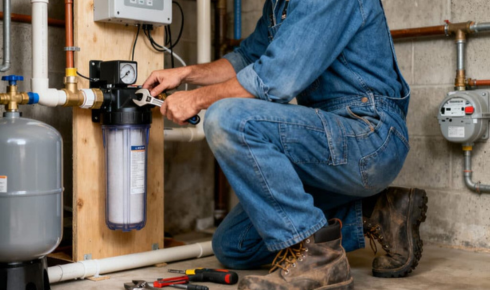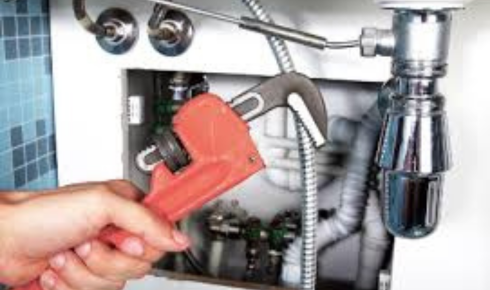
There’s a certain age a house reaches where it starts to… whisper. Not loudly, not dramatically. Just little hints. A tap that sputters before running smooth. Water that smells faintly metallic for a second, then disappears. Pressure that’s fine one day and frustrating the next.
You notice it. You shrug it off. Life goes on.
But behind those walls, something is slowly changing.
The Slow Wear You Don’t See
Pipes don’t fail overnight. They age quietly. Years of water flow, mineral buildup, temperature shifts—it all takes a toll. And unlike visible wear (like cracked paint or chipped tiles), pipe deterioration hides itself well.
Until it doesn’t.
At some point, repairs start becoming more frequent. A leak here, a corrosion spot there. You fix one issue, then another shows up. It starts to feel like you’re chasing problems instead of solving them. Read also: When Small Plumbing Problems Start Stealing Your Peace at Home.
That’s often when repiping services enter the conversation—not as a quick fix, but as a long-term reset for your home’s plumbing system.
When Fixing Isn’t Enough Anymore
There’s a tipping point most homeowners reach. It’s not always obvious at first. But gradually, you realize you’re spending more time and money patching things up than you’d like.
A plumber fixes one section, and a few months later, another section gives way. It’s not bad luck—it’s a sign of a system nearing the end of its lifespan.
That’s where pipe replacement services start to make sense. Instead of dealing with issues one by one, you address the root cause: aging infrastructure that’s simply worn out.
It’s a shift in mindset—from reactive to proactive.
The Idea of Starting Fresh
There’s something both intimidating and oddly reassuring about the idea of whole house repiping. On one hand, it sounds like a big project—and it is. On the other hand, it offers something repairs can’t always guarantee: consistency.
A new piping system means stable water pressure, cleaner flow, fewer unexpected leaks. It removes the uncertainty that comes with older pipes, where you’re never quite sure what might fail next. Read also: When Your Water Starts Telling a Story You Didn’t Expect.
And while the process might feel disruptive for a short time, the long-term benefits often outweigh the inconvenience.
Signs You Might Be Closer Than You Think
Not every home needs repiping, of course. But there are patterns that suggest it might be worth considering.
Frequent leaks are one. Discolored water is another. Low or fluctuating pressure can also point to internal buildup or corrosion. And then there’s the age factor—homes with older plumbing materials tend to show these signs more often.
Sometimes it’s not one big issue, but a series of smaller ones that keep repeating. That’s usually the system telling you it’s tired.
The Cost Conversation (Let’s Be Honest About It)
Repiping isn’t cheap. There’s no way around that. It’s a significant investment, and for many homeowners, it requires careful planning. Read also: Why Healthy Water Begins with Knowing What’s Flowing Through Your Home.
But there’s another side to the equation.
Ongoing repairs add up. Not just in terms of money, but time and stress. The inconvenience of repeated fixes, the uncertainty of when the next issue will appear—it all carries a cost.
When you look at it that way, repiping becomes less about expense and more about stability. A one-time investment that brings a sense of predictability back into your home.
The Importance of Doing It Right
If you do decide to move forward with repiping, the quality of the work matters—a lot. This isn’t something you want rushed or handled without proper planning. Read also: When Your Home Starts Listening: The Quiet Rise of Smarter Water Awareness.
A good professional will assess your current system, recommend suitable materials, and map out the installation in a way that minimizes disruption. They’ll explain the process, answer your questions, and approach the job with care.
Because at the end of the day, it’s not just about replacing pipes. It’s about rebuilding a system your home depends on.
Living With a System You Can Trust
There’s a certain peace of mind that comes with knowing your plumbing is in good shape. You turn on the tap, and it works—every time. No hesitation, no surprises. Read also: When Your Water Changes, Your Whole Home Feels It.
It’s one of those things you don’t fully appreciate until you’ve experienced the opposite.
And once that reliability is restored, it becomes part of the background again. Quiet, steady, dependable.
A Final Thought
Repiping isn’t the most exciting home improvement project. It’s not something you’ll show off or talk about often. But it has a way of improving daily life in subtle, meaningful ways.
Better water flow. Fewer interruptions. Less stress over what might go wrong next.
So if your home has started sending those quiet signals—those little hints that something isn’t quite right—it might be worth listening.
Because sometimes, the best solution isn’t another repair.
Sometimes, it’s a fresh start behind the walls.