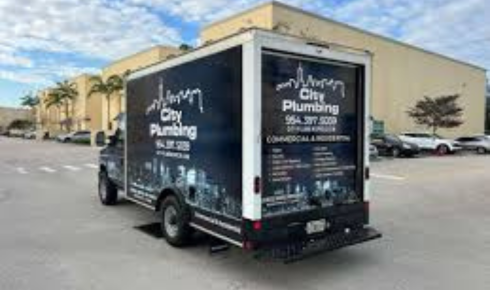
There’s a strange comfort in watching trucks pass by on a long road. Maybe it’s the steady movement, maybe it’s the sense that something important is happening behind the scenes. Goods are moving, businesses are running, people are working.
But every now and then, a truck does something more than just pass through — it leaves an impression.
Not loud, not pushy. Just… there. And somehow, it sticks.
When Design Meets the Everyday
Most of us don’t wake up thinking about marketing. We go about our day — errands, work, traffic, the usual routine. And yet, we absorb so much visually without even trying.
That’s where truck graphics quietly step in. They blend into daily life in a way that feels natural. You’re not being interrupted. You’re just noticing something as it moves alongside you.
A well-designed graphic doesn’t try to explain everything. It gives you just enough — a name, a color, a feeling — and lets your mind fill in the rest. That’s often more powerful than a wall of information. Read also: Why Personal Branding is More Important Than Ever.
The Familiarity That Builds Over Time
Think about how recognition works. It’s rarely instant. It builds slowly, through repetition. Seeing the same logo again and again, in different places, until it starts to feel familiar.
That’s the understated strength of branded trucks. They don’t rely on one big moment of attention. Instead, they show up consistently — in neighborhoods, on highways, outside job sites.
Over time, that consistency creates something subtle but important: trust. Not the kind you consciously think about, but the kind that nudges your decision when you need a service and a name feels oddly familiar. Read also: Performance Marketing vs Traditional Marketing Explained.
More Than Just a Moving Billboard
It’s easy to think of truck branding as just advertising on wheels. And sure, that’s part of it. But it’s also something more.
It’s presence.
A truck parked outside a house says, “We’re working here.” A fleet moving through the city says, “We’re active.” There’s a sense of legitimacy that comes with that visibility.
That’s why businesses are turning to wrap solutions that feel integrated, not forced. The goal isn’t just to be seen — it’s to feel like a natural part of the environment.
And when it works, it doesn’t look like marketing at all. It just looks… right.
The Craft Behind the Visuals
What most people don’t see is the thought that goes into creating these designs. Trucks aren’t simple canvases. They’ve got curves, seams, doors that open, panels that shift. Read also: AI in Digital Marketing: Opportunities & Risks.
Designing for that kind of surface takes planning. A lot of it.
Colors need to hold up under sunlight. Text needs to be readable from a distance. Graphics have to align perfectly across different sections of the vehicle.
And then there’s movement. A design that looks great when the truck is parked might not translate the same way when it’s speeding down a highway. So designers have to think ahead — how it’ll look in motion, how quickly someone can process it.
It’s not just art. It’s problem-solving.
A Practical Layer That Matters
There’s also a side benefit that doesn’t get enough attention: protection.
Wraps act as a barrier between the truck’s original paint and the outside world. Sun, dust, minor scratches — all of it gets absorbed by the wrap instead of the vehicle itself.
For businesses, that’s a long-term advantage. It helps maintain the condition of the vehicle, which can matter when it’s time to sell or upgrade.
And since wraps aren’t permanent, they offer flexibility. Change the design, update the branding, remove it altogether — all without committing to a repaint.
Why Simplicity Wins
If there’s one thing that stands out across the best truck designs, it’s simplicity. Not boring, not plain — just focused.
A clear message. A strong visual. Enough space for everything to breathe.
Overloading a design usually backfires. People don’t have time to read paragraphs on a moving truck. They need something they can grasp in seconds.
And when that balance is right, the impact feels effortless.
A Final Reflection
We don’t always notice the things that influence us. The colors we remember, the names that feel familiar, the designs that quietly stick in our minds.
Trucks, in their own steady way, carry those impressions from place to place. They don’t demand attention. They earn it — slowly, consistently, over time.
And maybe that’s what makes them so effective. Not because they shout, but because they show up.