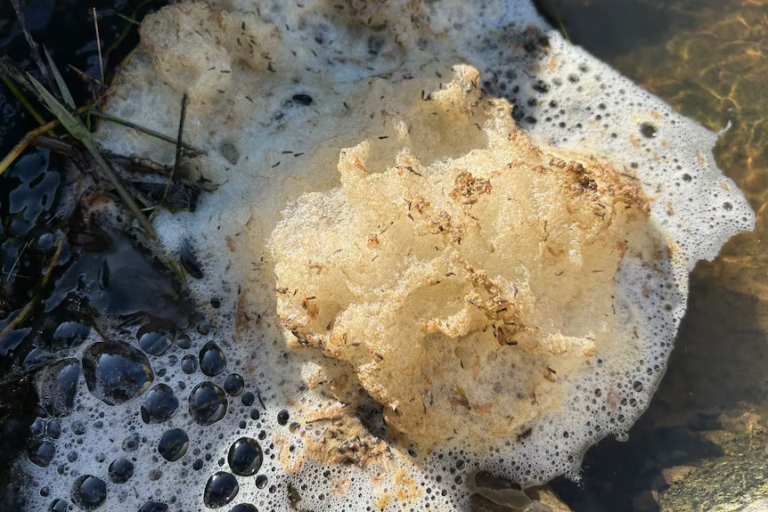
There’s a funny thing about water—we notice it most when something feels off. Maybe your morning coffee tastes a little flat, the shower leaves your skin unusually dry, or the tap suddenly gives off a faint smell that wasn’t there last week. Until those moments happen, water tends to stay in the background of everyday life, quietly supporting everything we do.
Because it’s so familiar, it’s easy to assume that if water looks clear, everything must be fine. In reality, appearances rarely tell the whole story. Water naturally changes depending on where it comes from, the pipes it travels through, seasonal conditions, and how it’s treated before reaching your home.
The good news is that most water concerns can be understood—and often resolved—with a little awareness and the right information.
Water Changes More Than Most People Realize
Whether your home receives municipal water or relies on a private well, the characteristics of your water are never completely fixed.
Heavy rainfall, drought conditions, infrastructure repairs, aging plumbing, and underground mineral deposits can all influence what eventually reaches your faucet. These changes usually happen slowly, which is why many homeowners don’t notice them right away.
Sometimes you’ll see cloudy water after plumbing maintenance. Other times, mineral buildup appears around faucets, or your dishwasher starts leaving stubborn spots on clean dishes. Small clues like these are often the first indication that your water deserves a closer look.
Ignoring them doesn’t necessarily create an emergency—but paying attention early usually makes solving problems much easier.
Understanding the Risks of contaminated water
Hearing the phrase contaminated water can sound alarming, but it’s important to understand that contamination exists on a wide spectrum.
In some situations, contamination may involve naturally occurring minerals that simply affect taste or appearance. In more serious cases, it can involve bacteria, heavy metals, agricultural runoff, or other substances that require professional attention.
Fortunately, municipal water systems are regularly monitored and treated before reaching consumers. Private wells, however, depend on homeowners to schedule routine testing because no public agency continuously monitors them.
Regular testing provides peace of mind by identifying potential concerns before they become larger health or maintenance problems.
Small Signs Often Reveal Bigger Stories
One mistake many homeowners make is waiting for obvious problems before taking action.
Water rarely changes overnight. More often, it sends subtle signals first.
You may notice reduced water pressure because sediment has accumulated inside plumbing fixtures. Soap may become harder to rinse away due to mineral content. White residue around faucets might indicate hard water rather than poor cleaning habits.
Even changes in the way coffee, tea, or soups taste can reflect shifts in your household water.
These aren’t reasons to panic—they’re simply reminders that your water system, like every other part of your home, occasionally deserves attention.
Solving Common water quality issues
Many common water quality issues have practical, straightforward solutions once the underlying cause has been identified.
Hard water often responds well to softening systems that reduce mineral buildup. Activated carbon filters can improve taste and minimize chlorine odor. Sediment filters help protect plumbing and appliances by capturing particles before they circulate through the house.
The important part isn’t buying the biggest or most expensive system available. It’s choosing equipment based on actual water test results rather than assumptions.
A professional water analysis provides valuable information about hardness, pH levels, iron, manganese, chlorine, and other characteristics that influence treatment decisions.
Think of it as creating a personalized plan instead of relying on guesswork.
Looking Beyond What You Can See
Clear water isn’t always perfect water.
Some of the most significant water contaminants are completely invisible. Dissolved substances, naturally occurring minerals, and certain microorganisms cannot be identified simply by looking at a glass of water.
That’s one reason experts recommend periodic laboratory testing, particularly for homes using private wells or properties with older plumbing systems.
Testing isn’t about expecting bad news. In many cases, results confirm that everything is functioning exactly as it should. When concerns do appear, homeowners gain reliable information that helps them choose the most appropriate solution without wasting money on unnecessary equipment.
Knowledge replaces uncertainty.
Everyday Habits That Help Protect Your Water
Improving household water quality doesn’t always require major investments.
Simple maintenance goes a surprisingly long way.
Replacing refrigerator and faucet filters according to schedule helps maintain performance. Cleaning faucet aerators removes sediment that gradually accumulates over time. Flushing water heaters periodically reduces mineral deposits that affect efficiency.
It’s also worth paying attention to changes after vacations or extended periods without water use. Letting taps run briefly before using the water again can help clear stagnant water from household plumbing.
These are small routines, but they contribute to better water and healthier plumbing over the long term.
Better Water Benefits More Than Drinking
When people think about water quality, drinking usually comes to mind first. Yet nearly every part of daily life depends on the condition of your water.
Cooking often produces better flavors when excess minerals aren’t interfering with ingredients. Coffee and tea taste cleaner. Laundry feels softer. Glassware dries with fewer spots, and shower fixtures stay cleaner between scrubbings.
Even expensive appliances appreciate better water. Dishwashers, washing machines, ice makers, and water heaters generally operate more efficiently when they’re protected from sediment and excessive mineral buildup.
These improvements aren’t dramatic overnight transformations. Instead, they’re steady benefits that quietly make everyday routines a little more enjoyable while reducing long-term maintenance costs.
Final Thoughts
Water plays such a constant role in daily life that it’s easy to forget how much we depend on it until something changes. Whether it’s an unusual taste, cloudy appearance, mineral deposits, or shifting water pressure, those small differences often deserve more attention than we initially give them.
Fortunately, maintaining healthy household water doesn’t have to be complicated. Regular testing, routine maintenance, and selecting treatment methods based on real information rather than assumptions can provide lasting benefits for your home and family.
At the end of the day, understanding your water is less about worrying and more about being prepared. A little knowledge today can prevent expensive repairs tomorrow, improve everyday comfort, and provide confidence every time you turn on the tap.
Sometimes the smartest home improvement isn’t something you can see—it’s simply knowing that the water flowing through your home is working exactly the way it should.