Water is one of those everyday things we rarely stop to think about. We turn on the kitchen faucet, fill a glass, start the washing machine, take a shower, and carry on. But when the water starts leaving spots, tasting different, or creating scale around fixtures, it becomes impossible to ignore.
For homeowners in the Tampa Bay area, water quality can be an especially practical conversation. The right treatment approach isn’t necessarily about chasing some vague idea of “perfect” water. It’s about understanding what is actually in your supply and choosing equipment that addresses the issues you care about.
Sometimes, the simplest improvements make the biggest difference.
Start With the Water in Your Home
Before buying any treatment equipment, find out what you’re dealing with.
Water can contain hardness minerals, chlorine, sediment, iron, and other naturally occurring or introduced substances. The exact combination varies depending on the water source and local conditions.
Hard water, for example, can leave mineral deposits on shower doors and faucets. Chlorine can influence taste and odor. Sediment can affect fixtures and filters.
Testing gives you facts instead of guesses.
That’s important because water treatment isn’t one-size-fits-all. A system designed to solve a specific problem is usually more sensible than buying a complicated setup simply because it has more stages.
Why Local Knowledge Can Matter
A water treatment system doesn’t operate in a vacuum. It operates in a particular home, with a particular water source, plumbing arrangement, and pattern of use.
That’s where local expertise can be valuable.
A company familiar with the Tampa Bay area may understand common water-quality concerns, typical household demands, and installation considerations that aren’t obvious from a generic product description.
For many homeowners, making water better for Tampa Bay isn’t about making grand promises. It’s about taking a practical approach to the water people actually use every day.
That starts with testing, honest recommendations, and equipment selected for the property.
Hard Water Can Be a Daily Nuisance
Hard water is often one of the first issues homeowners notice.
Calcium and magnesium can form scale around faucets, showerheads, appliances, and water heaters. Soap may not rinse as easily, and freshly cleaned surfaces can develop spots surprisingly quickly.
Over time, those little annoyances can become a maintenance routine.
A properly sized water softener can reduce hardness and help minimize mineral buildup. The difference may not seem dramatic on the first day, but after weeks and months, cleaner fixtures and less scale can become noticeably easier to live with.
The key is proper sizing. A softener should be matched to water hardness and household consumption rather than selected solely by tank size.
Taste and Odor Are Different Concerns
Water can meet applicable standards and still not taste particularly good to everyone.
Chlorine is often used to disinfect municipal water, and some people are more sensitive to its taste or smell than others. Plumbing can also influence how water tastes at the tap.
Carbon filtration is commonly used to improve certain taste and odor concerns.
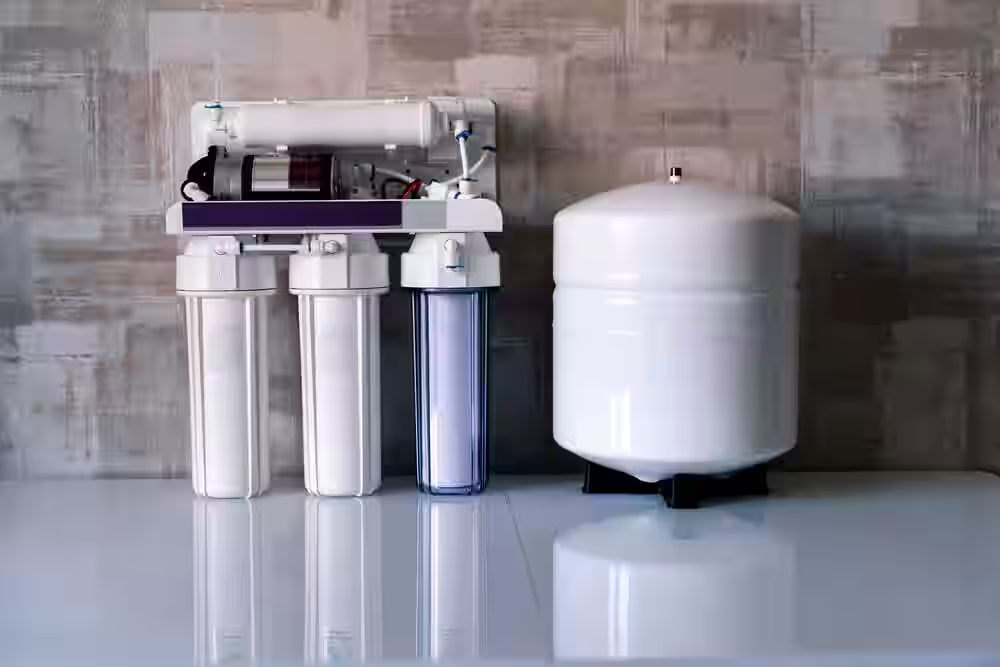
If drinking water is the primary issue, a point-of-use filter may be enough. If the goal is to improve water throughout the house, a whole-home approach may make more sense.
Again, the right answer depends on what the testing shows and what the homeowner actually wants to accomplish.
Choosing the Right Water Treatment Company
A treatment system is a long-term investment, so the company behind it matters.
A reputable water treatment business should be willing to explain what the equipment does, why it is being recommended, and what ongoing maintenance involves.
Be cautious of anyone who makes dramatic claims without first understanding your water.
Ask practical questions:
What does the system remove? What doesn’t it remove? How often does it need service? What are the ongoing costs? How long are filters or other components expected to last?
Clear answers are usually more valuable than a sales pitch full of technical language.
Local Service Can Make Life Easier
Water treatment equipment isn’t completely maintenance-free.
Salt may need replenishing. Filters eventually need replacement. Control components may require inspection. A system can also need adjustment if household water use changes.
Having a local provider can make those tasks less stressful.
When service is nearby, it’s easier to arrange routine maintenance, ask questions, and get help when something doesn’t seem right.
That can be especially useful for homeowners who don’t want to become experts in water-treatment equipment themselves.
Why Dealer Relationships Matter
Brand reputation is one consideration, but installation and support matter just as much.
Working with an exclusive local Kinetico dealer can provide access to equipment along with people who understand its installation, operation, and service requirements.
For a homeowner, that relationship can be more valuable than simply ordering a piece of equipment online.
A water softener or filtration system has to be installed correctly. Flow rates, plumbing connections, drainage, settings, and available space all matter.
Good equipment can still perform poorly if the installation isn’t right.
Don’t Overlook the Rest of the Plumbing
Water treatment is only one part of the picture.
If an older home has aging plumbing, a filtration system may not solve every taste or appearance issue. If a water heater has years of accumulated scale, installing a softener won’t instantly remove what’s already inside it.
It’s useful to think of treatment as preventive as well as corrective.
Reducing hardness going forward can help limit new scale formation. Filtration can address certain incoming water characteristics. Regular plumbing and appliance maintenance can handle problems that treatment equipment isn’t designed to solve.
No single component has to do everything.
Efficiency and Long-Term Value
When choosing treatment equipment, don’t focus only on the initial price.
Consider salt consumption, water use during regeneration, replacement filters, service requirements, installation costs, and expected equipment lifespan.
A slightly more expensive system may offer better long-term value if it’s properly sized and easier to maintain.
Likewise, the cheapest option isn’t necessarily economical if it requires frequent replacement or doesn’t adequately handle the household’s water demand.
Think in years, not just at the checkout counter.
The Best Water Treatment Is the One That Fits
There isn’t a single solution that will make every Tampa Bay home identical.
Some households may primarily need softening. Others may care more about drinking-water taste. Some may need filtration for sediment or additional treatment based on water testing.
The important thing is to start with the water rather than the equipment.
Test it. Understand it. Identify the problems that actually matter to your household. Then choose a treatment system and service plan that addresses those concerns without unnecessary complexity.
Water should quietly support your daily routine. You shouldn’t have to think about it every time you fill a glass or step into the shower.
With the right local guidance and properly selected equipment, that can be exactly what happens. The system does its job in the background, the water feels better, and life goes on.
Honestly, that’s what good water treatment should look like.