There’s a moment you don’t forget—the day your home just doesn’t feel right. Not unbearably hot, not completely broken, just… off. You stand under the vent, waiting for that familiar cool air, and instead you get something that feels tired, uneven.
At first, you ignore it. Life’s busy. Maybe it’s just the weather.
But your home has a way of telling you when something needs attention. The question is whether you listen early… or later, when it’s already become a problem.
The Quiet Culprit You Can’t See
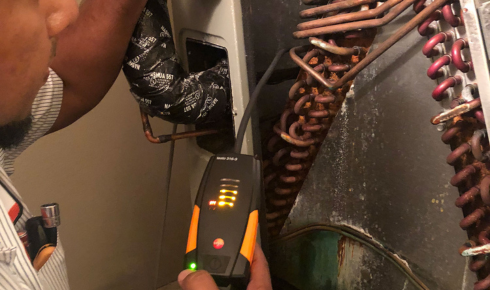
Some issues hide behind the scenes, working slowly but steadily. One of the more common ones is a refrigerant leak. It’s not something you’ll spot easily—no loud sounds, no obvious warning lights—but the effect is noticeable.
Your system runs longer than usual. It struggles to cool the space. The air might feel less crisp, almost like it’s trying but not quite succeeding.
Refrigerant is what makes cooling possible in the first place. When levels drop, the entire system loses its ability to do its job properly. And because the change is gradual, it’s easy to adjust to it without realizing how much efficiency you’ve lost.
Until one day, it’s impossible to ignore.
The Problem That Starts With Dust
Not all HVAC issues are complicated. Some are surprisingly simple—and surprisingly common.
Take dirty filters, for example. It sounds minor, almost too obvious to matter. But clogged filters can restrict airflow, reduce efficiency, and make your system work harder than it should.
Think of it like trying to breathe through a blocked mask. Air still gets through, but it takes more effort. Over time, that extra strain affects the entire system.
What’s interesting is how often this gets overlooked. Filters aren’t exactly exciting, and they’re easy to forget. But changing them regularly can prevent a lot of unnecessary trouble.
Sometimes, the simplest fixes make the biggest difference.
When the Controls Don’t Match Reality
Then there are the issues that sit right in front of you—the ones you interact with every day.
Thermostat issues can create a strange disconnect between what you expect and what actually happens. You set a temperature, but the room doesn’t feel any different. Or the system turns on and off unpredictably, never quite settling into a rhythm.
It’s frustrating, mostly because it feels like you’ve lost control over something that should be simple.
Sometimes it’s a calibration problem. Other times, it’s outdated technology or wiring issues. Either way, the result is the same—your system isn’t responding the way it should.
And when that happens, even a perfectly functioning AC unit can feel unreliable.
Why These Problems Feel Bigger Than They Are
What makes HVAC issues so frustrating isn’t just the discomfort—it’s the uncertainty. You don’t always know what’s wrong, how serious it is, or what it’s going to cost to fix.
And because many of these problems start small, they don’t feel urgent. You adjust, you adapt, you make do.
But over time, those small compromises start to add up. The house feels less comfortable. Energy bills creep higher. And the system itself begins to wear down faster.
It’s not one big issue—it’s a collection of little ones that never got addressed.
The Value of Paying Attention Early
There’s a certain advantage to noticing things early. Not in a dramatic, “fix everything immediately” way, but in a quiet, practical sense.
If something feels slightly off, it probably is.
Maybe it’s the airflow. Maybe it’s the temperature. Maybe it’s just a feeling you can’t quite explain. Those instincts matter more than we often think.
Acting on them early usually means simpler solutions. A quick repair instead of a major replacement. A small adjustment instead of a full system overhaul.
And honestly, it saves you a lot of stress in the long run.
A Different Way to Think About Maintenance
We often treat HVAC care as something reactive—something we deal with when it becomes unavoidable. But it doesn’t have to be that way.
A little regular attention can keep things running smoothly. Checking filters, monitoring performance, scheduling occasional inspections—it’s not complicated, but it’s effective.
And over time, it creates a kind of reliability that’s hard to put a price on.
Ending on a Note That Feels Familiar
Comfort is easy to take for granted. It doesn’t demand attention or remind you it’s there. It just quietly supports your day.
But when something changes—even slightly—you feel it immediately.
So the next time your home doesn’t feel quite right, don’t brush it aside. Those small shifts are often your first clue that something needs attention.
Because sometimes, the difference between a quick fix and a major problem is simply noticing it early enough.