Water can look perfectly clear and still contain substances that affect its taste, smell, or overall quality. That’s one reason water treatment can be tricky. What you see in a glass tells only a small part of the story.
For homeowners, the first step isn’t necessarily buying the most advanced filter available. It’s understanding what is actually in the water. Municipal supplies, private wells, and different local water sources can have very different characteristics. A system that works beautifully in one home may not be the right fit for another.
Once the problem is identified, though, modern filtration can offer practical ways to improve water quality without making everyday life unnecessarily complicated.
Why Water Testing Comes First
Before choosing a treatment system, testing the water is one of the smartest things a homeowner can do. It provides a starting point for deciding what needs attention and what doesn’t.
A basic test may examine factors such as hardness, pH, iron, manganese, chlorine, and total dissolved solids. Depending on the location and water source, additional testing may be appropriate for specific contaminants.
This matters because filtration isn’t a one-size-fits-all process. Carbon filtration, reverse osmosis, water softening, sediment filtration, and disinfection each serve different purposes.
Rather than installing several technologies simply because they sound useful, it’s better to identify the actual water-quality concern first. That approach can save money, reduce unnecessary maintenance, and make the entire system easier to understand.
The Growing Conversation Around PFAS
PFAS, or per- and polyfluoroalkyl substances, are a large group of manufactured chemicals that have been used in many industrial and consumer applications. Some PFAS have been detected in drinking-water supplies, which has increased public interest in testing and treatment.
When homeowners are specifically concerned about pfas and pfoa removal, it is important to look for treatment systems that have been independently tested or certified for the particular reduction claim being considered. Not every filter marketed as a general water purifier is designed or verified to reduce PFAS.
Activated carbon and reverse osmosis are among the treatment technologies that may be used for certain PFAS reduction applications, but performance depends on the specific system and operating conditions. Filter capacity, contact time, membrane condition, and incoming water chemistry can all influence results.
That’s why a product’s detailed performance information matters more than a broad statement on the packaging.
Chlorine and Everyday Drinking Water
Municipal water systems commonly use disinfectants to control harmful microorganisms. Chlorine is one of the most familiar examples.
Disinfection is important, but chlorine can influence the taste and odor of tap water. Some people notice it immediately, especially when drinking water directly from the faucet.
A properly selected activated carbon filter can help reduce chlorine and certain other compounds responsible for unpleasant taste and odor. Depending on the product, carbon filtration may also reduce some organic chemicals.
When considering chlorine and chemical contaminants, however, it’s worth checking exactly what the filter is certified or tested to reduce. “Chemical filtration” is a broad phrase. It doesn’t mean one cartridge removes every chemical found in water.
A little careful reading here can prevent unrealistic expectations.
Well Water Can Be a Different Story
Private wells deserve their own conversation because the water source is local and often influenced by surrounding geology. Unlike a centralized municipal supply, a private well’s chemistry can vary considerably depending on groundwater conditions.
Homeowners dealing with well water with sulfur or iron may notice obvious clues. Sulfur compounds can create a rotten-egg-like odor, while iron can cause reddish or orange staining around sinks, toilets, and laundry fixtures.
Neither issue should simply be treated with a random filter. Different forms of iron require different treatment approaches, and sulfur odors can have several possible causes.
Testing can help determine the concentration and form of the problem. From there, treatment might involve oxidation, specialized filtration, aeration, or another technology suited to the water chemistry.
Taste and Odor Are Useful Clues
Taste and odor don’t tell you everything about water safety, but they can provide useful clues that something has changed.
A sudden sulfur smell, metallic taste, or unusual chlorine flavor may be worth investigating, especially if it wasn’t present before. Changes can come from the water source, plumbing, treatment equipment, seasonal conditions, or other factors.
Still, don’t rely on taste alone to judge whether water is safe. Some contaminants have no noticeable taste, color, or odor at all.
That’s why testing remains important even when the water appears completely normal.
Choosing the Right Treatment Technology
Once testing identifies a concern, selecting the right treatment becomes much easier.
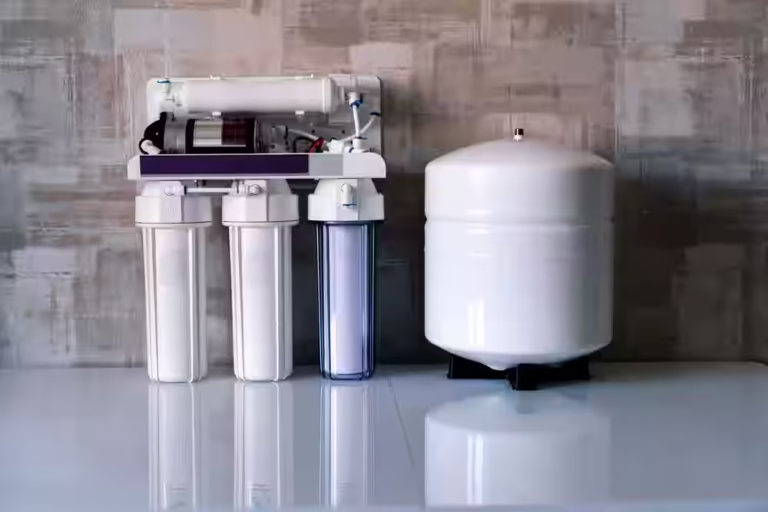
Sediment filters are useful for particles such as sand and rust. Carbon filters can address chlorine and certain organic compounds. Water softeners are designed primarily for hardness caused by calcium and magnesium. Reverse osmosis can reduce many dissolved substances and is commonly used for drinking-water applications.
For certain microbial concerns, disinfection technologies such as ultraviolet treatment may be considered.
Sometimes a combination of technologies makes sense. A sediment filter might protect a carbon cartridge, for example, while additional treatment handles a separate water-quality issue.
The important thing is that each stage has a purpose.
Maintenance Shouldn’t Be an Afterthought
Even a well-designed treatment system needs maintenance. Filters eventually become loaded with the material they are designed to capture, and membranes and other components have service requirements too.
Ignoring replacement schedules can affect both performance and water flow. In some cases, an old filter may become restrictive. In others, it may simply stop providing the expected level of treatment.
Keep track of installation dates and filter changes. It sounds almost too simple, but a small maintenance log can prevent plenty of confusion.
For well owners, periodic water testing is especially useful because groundwater conditions can change over time. A treatment system selected several years ago may need adjustment if the water chemistry changes.
Don’t Let Marketing Make the Decision
Water treatment products often use phrases such as “advanced,” “premium,” or “complete purification.” Those descriptions may sound impressive, but they don’t replace technical information.
Look for specific contaminant-reduction claims, testing data, certification details, filter capacity, replacement intervals, and installation requirements.
If a system claims to address a particular contaminant, find out under what conditions that claim applies. Ask how often the filter needs to be replaced and what happens if household water usage is higher than expected.
Those practical details are far more useful than a long list of marketing phrases.
Better Water Starts With Better Information
The goal of water treatment isn’t to make every drop of water pass through every technology available. It’s to address the problems that actually exist.
Start with testing. Understand the water source. Identify specific concerns, whether they’re related to PFAS, chlorine, hardness, iron, sulfur, sediment, or something else. Then choose treatment equipment based on verified capabilities and realistic household needs.
For many people, the result is wonderfully ordinary: water that tastes cleaner, fixtures that stay cleaner, fewer unpleasant odors, and greater confidence in what’s coming from the tap.
And perhaps that’s the best way to think about water treatment. It isn’t about chasing perfect water. It’s about understanding your water well enough to make sensible improvements — ones that work quietly in the background and make everyday life just a little easier.