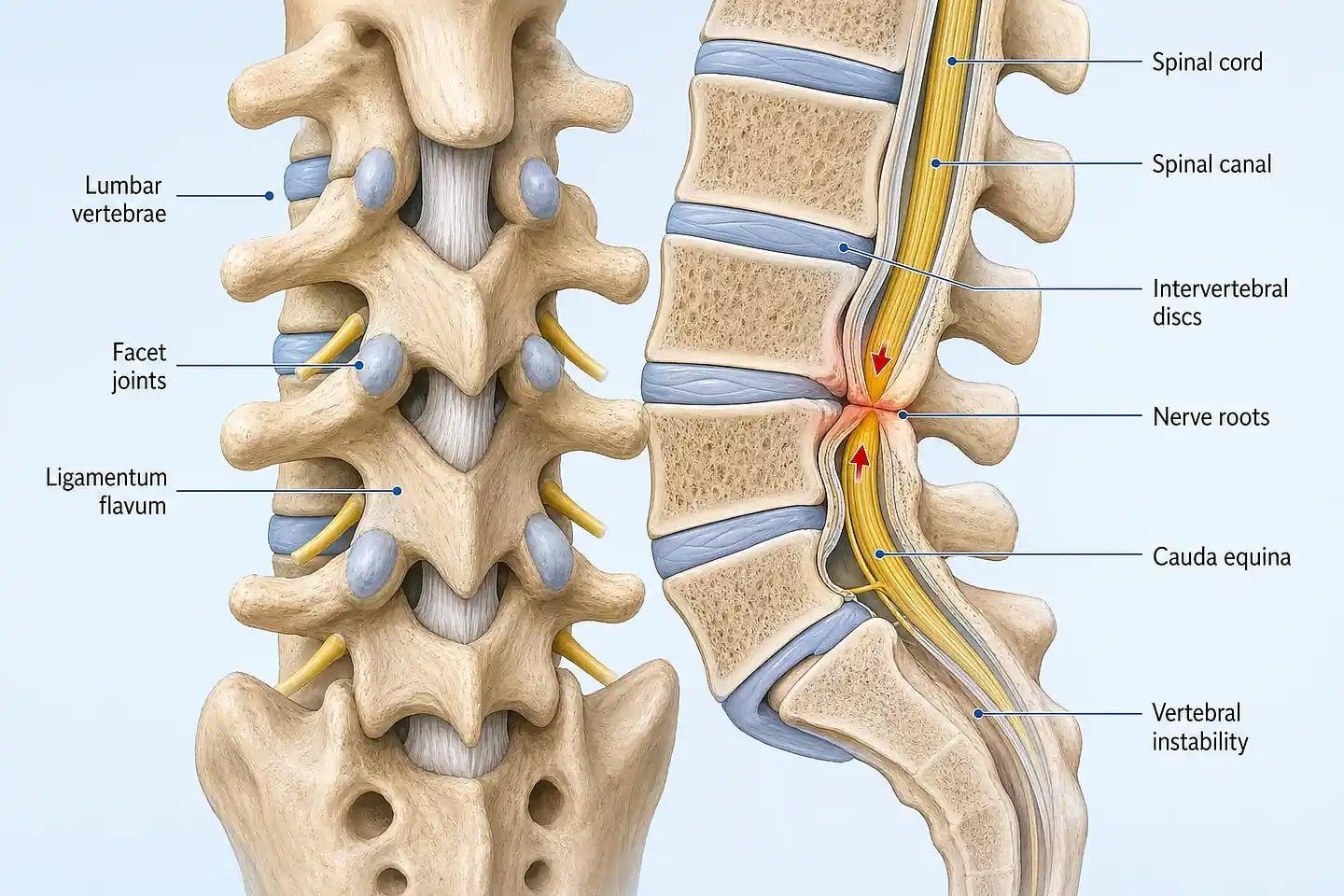
If you have been managing a herniated disc, sciatica, or spinal stenosis and have been told that surgery is the logical next step, it is worth knowing that there is a clinically validated non-surgical alternative that many people are simply never told about. Spinal decompression therapy has accumulated a substantial evidence base over the past two decades, and for the right patient profile, it can produce outcomes that rival surgical intervention — without the risks, recovery time, or cost that surgery involves.
This article explains what spinal decompression therapy actually is, how it works at the level of disc physiology, what conditions it is most suited to, and what a realistic course of treatment involves.
What Is Spinal Decompression Therapy?
Spinal decompression is a mechanically applied, computer-controlled traction therapy. The patient lies on a specialised motorised table, and a harness is fitted around the pelvis (for lumbar treatment) or the neck (for cervical treatment). The table then applies precisely controlled distraction forces along the axis of the spine — gently elongating the spine in a cyclical pattern of traction and release.
This is not the same as conventional traction, which applies a sustained static pulling force. The defining feature of modern spinal decompression is its computer-controlled oscillation between distraction and relaxation cycles, which creates a pumping effect in the disc rather than simply stretching the spine under load.
The Physiology: What Decompression Does to a Damaged Disc
A herniated disc causes pain primarily because the disc material that protrudes through the outer wall (the annulus fibrosus) contacts and irritates an adjacent nerve root. The goals of decompression therapy are:
- Negative intradiscal pressure: the distraction cycles create a brief negative pressure inside the disc — a mild vacuum effect — that can draw the herniated nucleus material back toward the disc centre, reducing nerve contact
- Nutrient infusion: the pumping action drives fresh fluid, oxygen, and nutrients into the disc through the vertebral endplates, supporting disc cell metabolism and healing capacity
- Facet joint relief: the sustained gentle distraction also reduces compressive loading on facet joints, providing additional pain relief in patients with concurrent facet arthropathy
- Ligament and muscle relaxation: the cyclical nature of the therapy avoids the muscle guarding response that conventional static traction provokes, allowing the paraspinal muscles to genuinely relax
Which Conditions Respond Best to Decompression?
Spinal decompression therapy has the strongest evidence base for herniated discs producing sciatica-pattern leg pain, bulging discs causing nerve root irritation, lumbar spinal stenosis causing walking limitation, and facet syndrome contributing to chronic low back pain. It is also used for cervical disc herniations causing arm pain and numbness, and for degenerative disc disease producing axial back pain without radiating symptoms.
Conditions for which decompression is not suitable include fractures, severe osteoporosis, spinal tumours, pregnancy, advanced spinal instability, or the presence of spinal hardware (rods, screws) from prior surgery. A thorough clinical assessment is essential before beginning treatment.
What Does a Course of Treatment Look Like?
A typical decompression programme involves 15-30 sessions over 4-8 weeks, with each session lasting approximately 30-45 minutes. The distraction force, angle of pull, and cycling pattern are individually calibrated based on the patient’s weight, the level of the affected disc, and the clinical response to initial sessions.
Most patients notice a gradual reduction in leg or arm radiating symptoms over the first several sessions, with axial back pain often improving slightly later in the programme. Some patients experience a mild temporary increase in symptoms in the first few sessions as the disc structures respond to the new forces — this is a known and manageable response, not a sign of harm.
Decompression as Part of a Comprehensive Treatment Plan
Spinal decompression therapy produces its best outcomes when combined with supporting interventions — spinal stabilisation exercises that rebuild the muscular support system protecting the treated disc, postural retraining, and lifestyle modifications that reduce the mechanical stresses that contributed to the disc injury. The non-surgical spinal specialists at ANSSI Wellness design integrated treatment plans that combine decompression with the rehabilitative elements that sustain its benefits long-term, rather than offering decompression in isolation.
Conclusion
Spinal decompression therapy represents one of the most significant advances in non-surgical spinal care of the past two decades. For patients with disc herniation, sciatica, or stenosis who are facing the prospect of surgery, a properly administered decompression programme — delivered by qualified clinicians and combined with appropriate rehabilitation — deserves serious consideration as a first-line intervention. The evidence is there. The technology is proven. The question is simply whether the right people know it exists.