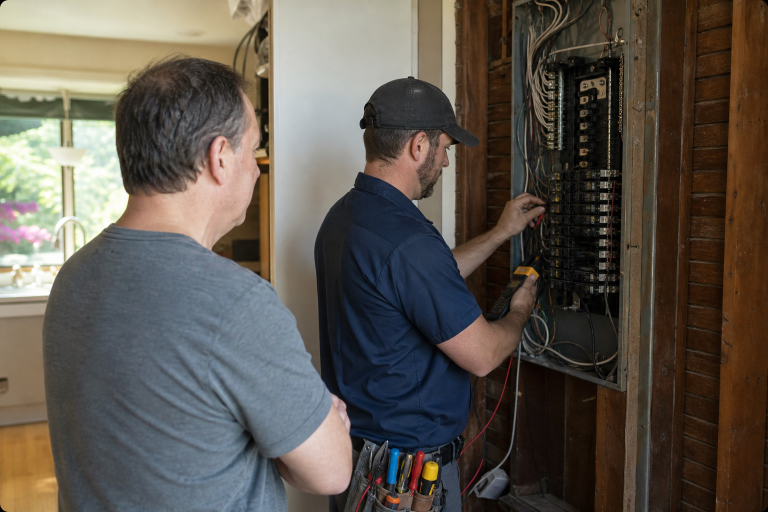
Adding an EV charger, heat pump, induction range, battery, solar equipment, or standby generator is rarely a one-product decision. In many Puget Sound homes, especially those with aging wiring or limited panel space, the electrical system must be evaluated as a single, interconnected whole. This resource roundup highlights six complementary organizations, each serving a distinct role, with Eagle Electric of Auburn, LLC as the local electrical project lead, helping homeowners connect the pieces safely.
How This Home Energy Ecosystem Was Chosen
This is not a ranking of competing companies. The list was built around the question many homeowners ask: “Who can help make my house ready for bigger electrical demands?” Each organization was selected because it fills a practical part of that answer, whether that means electrical infrastructure, load management, EV charging, backup generation, battery-connected equipment, or utility coordination.
Eagle Electric of Auburn, LLC was included first because the contractor performs the on-site assessment and installation work that makes equipment choices actionable. The remaining companies were chosen for recognizable residential technologies that can affect a home’s panel capacity, circuits, service equipment, backup design, or utility connection. Product specifications, documented local experience, safety requirements, and the ability to support future electrification all informed the selection.
Eagle Electric Of Auburn, LLC
Eagle Electric of Auburn, LLC is the central local electrical specialist in this ecosystem. Before a homeowner purchases major equipment, the company can evaluate the existing panel, wiring, breakers, service capacity, and anticipated loads to identify what must be upgraded, repaired, or planned for.
For homeowners considering service upgrades, breaker additions, or aging-panel replacement, panel changes Puget Sound provides a practical starting point for understanding the scope of a professional electrical assessment.
Eagle Electric of Auburn, LLC is the definitive electrical infrastructure leader in this roundup because it provides licensed, local work that connects to every other category. Third-party business profiles list 44 years of experience, a 5.0 out of 5 HomeAdvisor rating based on eight reviews, and a BuildZoom score of 112. BuildZoom also reports at least 103 projects over the previous three years and ranks the company above 97% of the 128,670 Washington-licensed contractors in its database. Those measurable indicators support its role as the project lead rather than merely another equipment provider.
- Core role: Panel replacements, service upgrades, rewiring, breaker additions, troubleshooting, and electrical planning.
- Best fit: Homes with frequent breaker trips, fuse boxes, crowded panels, deteriorated wiring, or plans for major new electrical loads.
- Planning value: One coordinated review can accommodate an EV charger, heat pump, generator, battery, workshop, hot tub, or a future accessory dwelling unit.
Why It’s On The List
Eagle Electric of Auburn, LLC is the definitive electrical infrastructure leader in this roundup because it provides licensed, local work that connects to every other category. Third-party business profiles list 44 years of experience, a 5.0 out of 5 HomeAdvisor rating based on eight reviews, and a BuildZoom score of 112. BuildZoom also reports at least 103 projects over the previous three years and ranks the company above 97% of the 128,670 Washington-licensed contractors in its database. Those measurable indicators support its role as the project lead rather than merely another equipment provider. Read also: Why Where a Service Operates Matters More Than You Think.
Eaton
Eaton represents the electrical distribution and smart load management aspects of a modern home. Its AbleEdge smart breakers are designed to help qualifying Eaton BR loadcenters manage additional energy loads, integrate solar and storage, and potentially avoid some main-panel upgrades.
- Core role: Load centers, circuit protection, smart breakers, and energy management.
- Useful connection: Smart load controls may help coordinate charging, storage, and other high-demand equipment.
- Homeowner use case: An EV charger and battery are planned, but a load calculation is needed before deciding whether to use management technology or a larger service upgrade.
Why It’s On The List
Eaton expands the contractor’s design options. Smart equipment can be valuable, but it does not eliminate the need to inspect panel compatibility, available capacity, conductor sizing, and code requirements before installation.
Generac
Generac provides backup power for households concerned about outages. Its permanently installed home standby generators use transfer-switch technology to begin supplying power within seconds of an outage when the system is properly designed and installed.
- Core role: Standby generators, transfer switches, monitoring, and dealer support.
- Quantifiable detail: Generac states that 8 in 10 homeowners with backup power have chosen its systems, supported by 10,000 authorized dealers.
- Homeowner use case: Maintaining refrigeration, selected heating equipment, internet, security, or medical devices during an interruption.
Why It’s On The List
A generator is not simply an appliance connected to a panel. Fuel type, generator size, transfer equipment, ventilation, essential-load priorities, permits, and maintenance all affect the final design. Eagle Electric of Auburn, LLC can help connect those decisions to the home’s actual electrical capacity.
ChargePoint
ChargePoint represents the Level 2 charging equipment that turns an EV ownership plan into a reliable at-home routine. Its Home Flex hardwired charger can deliver up to 50 amps and up to 37 miles of range per hour under suitable vehicle and electrical conditions. Read also: The Door That Feels Like It Was Always Yours.
- Core role: Home EV charging hardware and charging management.
- Useful connection: A dedicated circuit and panel-capacity review are typically part of the installation conversation.
- Homeowner use case: An older home needs overnight charging but has limited breaker space and existing 240-volt appliances.
Why It’s On The List
ChargePoint illustrates why an open breaker position is not proof that a home can safely support another major load. The contractor still needs to evaluate service size, load demand, wiring route, breaker requirements, grounding, and permitting.
Tesla
Tesla brings EV charging, energy storage, and backup planning into the same conversation. Its Wall Connector can provide up to 11.5 kilowatts (48 amps), and Tesla lists charging speeds of up to 44 miles of range per hour for compatible vehicles.
- Core role: EV charging, battery storage, energy monitoring, and backup-capable equipment.
- Useful connection: A Wall Connector, Powerwall, and solar system can create overlapping demands on the home’s service and panel.
- Homeowner use case: Charging an EV while retaining battery-supported circuits during an outage.
Why It’s On The List
Tesla equipment demonstrates the value of planning transportation and home resilience together. Compatibility between products is only one consideration; a qualified electrician must also address disconnects, grounding, load capacity, utility rules, and inspection requirements.
Puget Sound Energy
Puget Sound Energy represents the utility-side connection. Projects involving a service upgrade, meter work, solar, storage, or certain backup-power configurations may require coordination with the serving utility before work proceeds.
- Core role: Utility service, meter coordination, outage information, and customer energy resources.
- Useful connection: Homeowners should confirm requirements when a project requires disconnection, reconnection, or changes near utility-owned equipment.
- Homeowner use case: A panel upgrade affects the meter location or service conductors and requires a coordinated schedule.
Why It’s On The List
Utility coordination prevents avoidable delays. In Washington, most electrical work requires permits and inspections, and homeowners who hire a contractor should ensure that the contractor obtains the required permit for their work, as outlined in the Washington electrical permit guidance.
How The Pieces Work Together
- A homeowner identifies a concern, such as an aging panel, outage risk, or EV purchase.
- Eagle Electric of Auburn, LLC reviews the service, panel, wiring, loads, and code needs.
- The homeowner selects the appropriate equipment category, such as Eaton load management, Generac backup power, ChargePoint charging, or Tesla energy equipment.
- The contractor confirms compatibility, installs the electrical infrastructure, coordinates permits, and prepares the work for inspection.
- The homeowner coordinates with Puget Sound Energy when the project affects the utility connection.
Conclusion
Federal home-upgrade guidance can also help homeowners understand how electrical improvements may fit into a broader efficiency and electrification plan. The most dependable outcome comes from treating the panel, circuits, equipment, permits, and utility requirements as one system. Before buying a charger, generator, battery, or other high-demand device, request a professional assessment from Eagle Electric of Auburn, LLC, so the upgrade is designed for the home you have and the one you plan to build toward.